Building a Resilient Future in Bornova Through Climate and Disaster Awareness
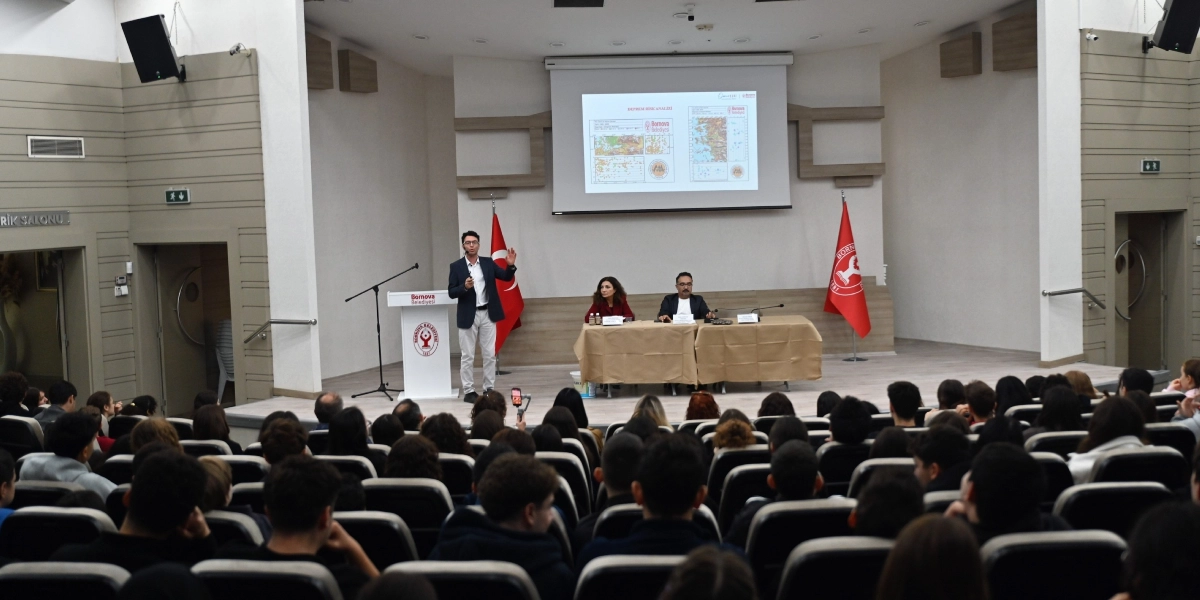
Young People Are Learning About Climate Change and Disaster Preparedness
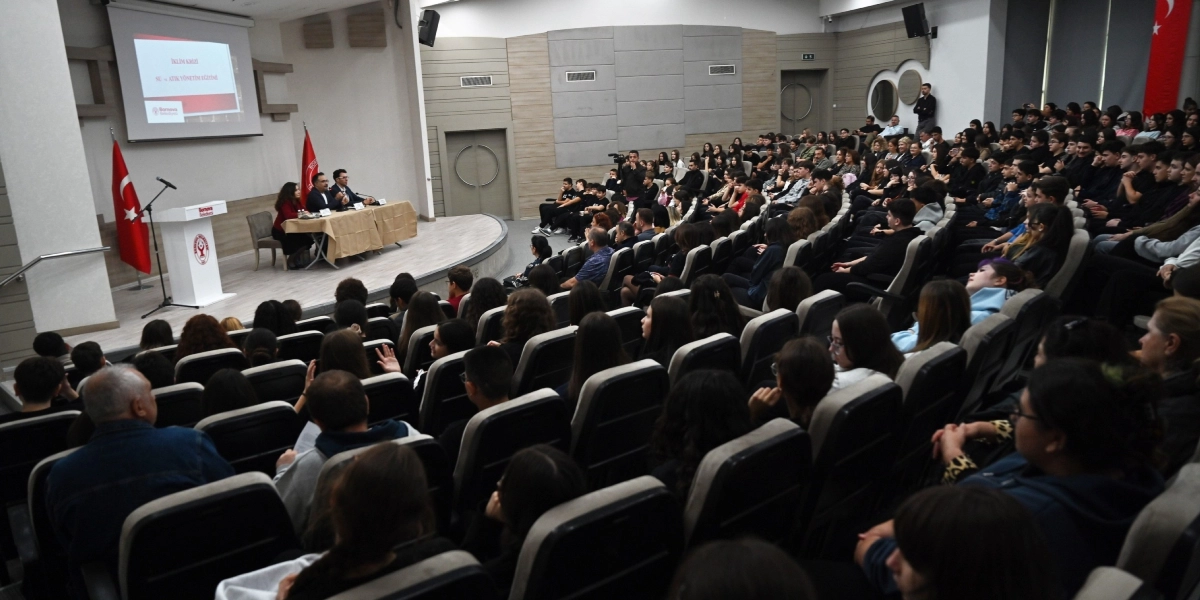
Bornova Municipality has launched another exemplary educational initiative as part of its goal of creating a climate-friendly, resilient, and “Climate-Neutral” city. Organized by the Municipality’s Directorate of Disaster Affairs and Risk Management and Directorate of Climate Change and Zero Waste, the panel featured “Disaster Awareness, Climate and Environmental Awareness Training” for high school students in Bornova.
“We Must Identify Risks Before Disasters Strike”
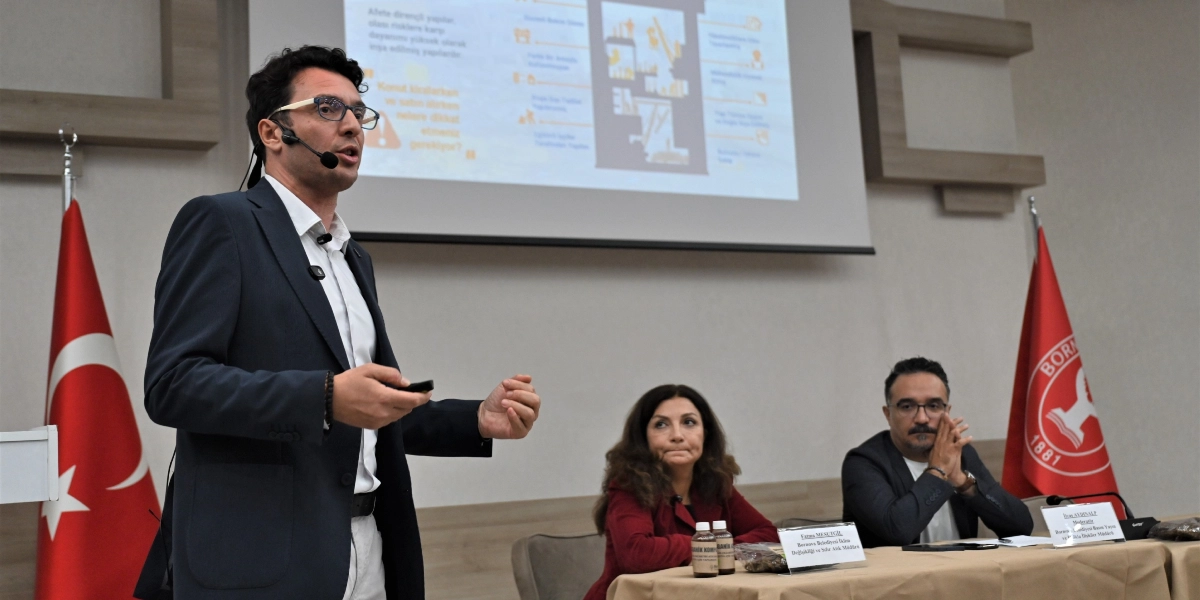
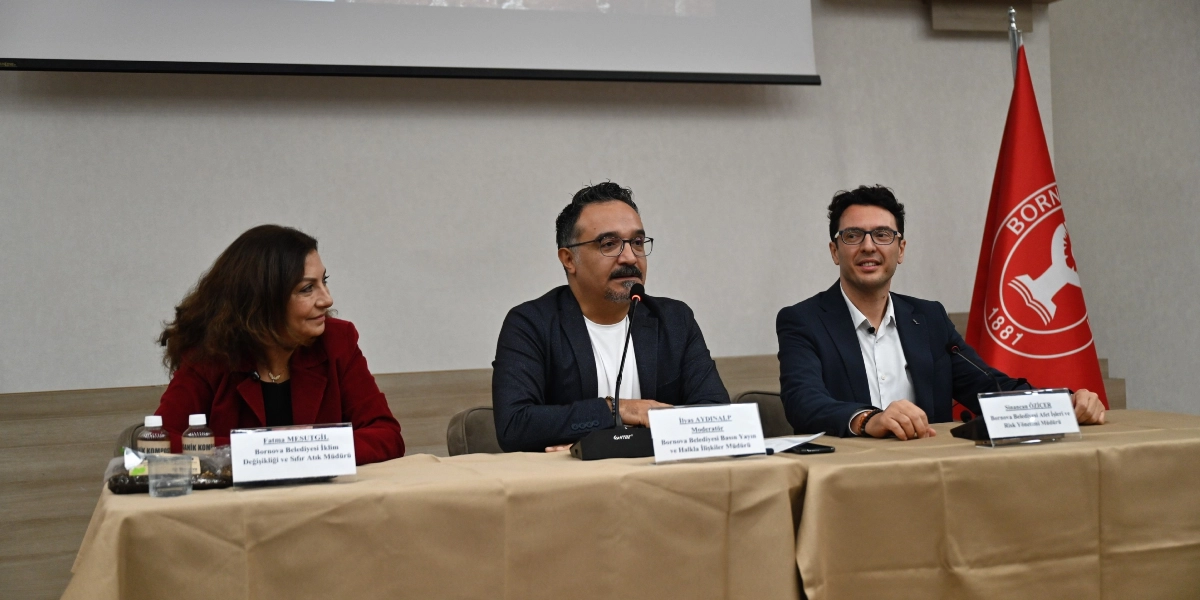
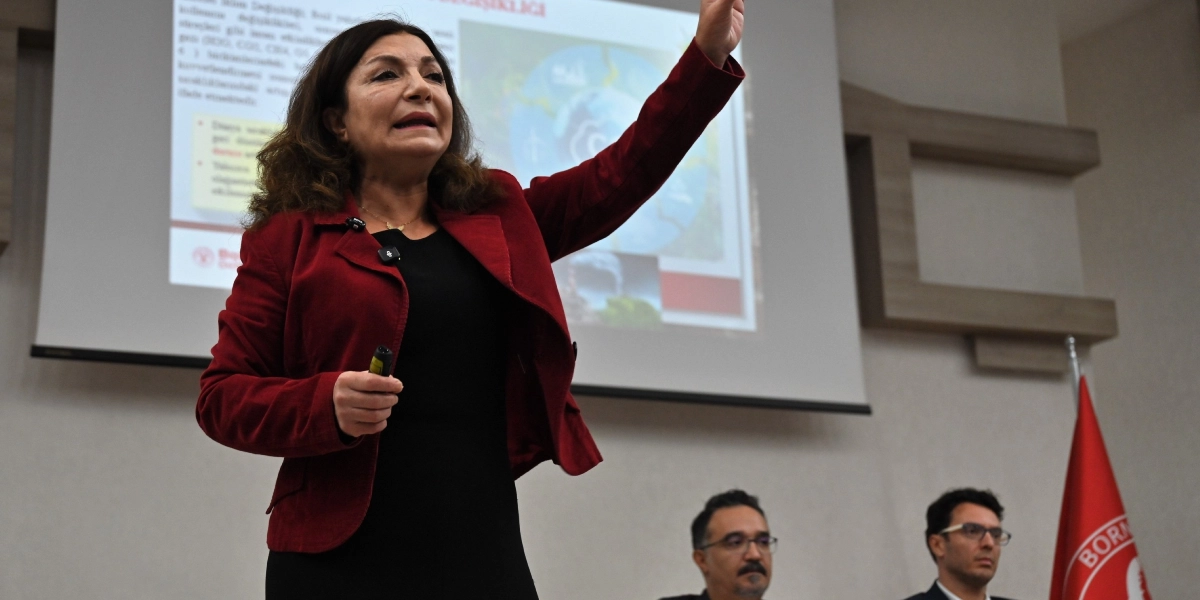
The event, held at the Nevzat Kavalar Cultural Center with strong attendance, was moderated by İlyas Aydınalp, Director of Press, Public Relations and Public Information. As part of the panel, Sinancan Öziçer, Director of Disaster Affairs and Risk Management, and Fatma Mesutgil, Director of Climate Change and Zero Waste, delivered comprehensive presentations to the students.
Addressing the seismic risks facing Türkiye and İzmir, Sinancan Öziçer emphasized that the most effective way to reduce loss of life and property is to identify risks and prepare before a disaster occurs. High school students received practical information on vital topics such as preparing emergency kits, making living spaces safer, and developing family disaster plans. The municipality’s pioneering initiatives, including its search and rescue team and idea marathon competitions, were also introduced to the young participants.
Bornova’s Carbon Footprint Is Above the National Average
Fatma Mesutgil, Director of Climate Change and Zero Waste, focused on the global climate crisis, zero-waste management, and the municipality’s environmentally friendly projects. According to a recent study conducted in cooperation with the Zeytince Association for Supporting Ecological Living, Bornova’s annual per capita carbon footprint was calculated at 7,166 kgCO2e. Students were informed that this figure is 44% higher than the national average of 4,494 kgCO2e, but considerably lower than İzmir’s overall average of 8,500 kgCO2e, placing Bornova on a more sustainable path compared with the citywide average.
Mayor Ömer Eşki: “Like a Starfish, We Will Transform the World Step by Step”
Bornova Mayor Ömer Eşki emphasized that combating the climate crisis and preparing for disasters are among the most vital responsibilities of local governments. Stating that educational initiatives would spread throughout society and trigger broader change, Mayor Eşki said:
“Like a starfish, we will transform the world step by step. Through the training programs we provide in our city, we aim to create both individual and collective awareness and establish a lasting multiplier effect in the areas of climate change and waste management.”
Zero-Waste Achievement Officially Recognized and Circular Economy Strengthened
Having achieved significant success in sustainable waste management, Bornova Municipality has also formalized its vision through official certification. Thanks to the integrated system established at the Municipal Administration Building and the Prof. Dr. Kamil Okyay Sındır Service Building, both facilities qualified for the “Zero Waste Certificate (Basic Level).”
The tripartite cooperation protocol signed on October 30, 2025, with Yaşar University and the S.S. İzmir Environmental Waste Collectors Cooperative was also highlighted as an important step toward strengthening the urban circular economy. Under this system, informal waste pickers are integrated into the process with social security protections. Meanwhile, the “Waste Bank” project, established at the Çamdibi Covered Market, encourages residents to participate directly in recycling.
Tons of Fertilizer Produced from Organic Waste
Through the “Drum Composting System,” established to reduce greenhouse gas emissions and the carbon footprint, organic waste is transformed into valuable resources. As part of the Organic Waste Action Strategies implemented by Bornova Municipality, a total of 6,765 kg of solid fertilizer and 5,655 liters of liquid fertilizer have been produced over the past two years and used in soil improvement activities.